Augmented Reality Integration Alters Strategic Approaches in Portable Live Casino Sessions
Sage Keller · Aug 21, 2026

Augmented Reality Integration Alters Strategic Approaches in Portable Live Casino Sessions
Augmented reality overlays have begun reshaping how participants approach choices in live dealer sessions accessed through portable devices, and data from industry reports indicate these visual layers supply immediate contextual information that influences betting patterns and risk assessment. Observers note that players receive superimposed data such as card probabilities, historical outcomes, and opponent tendencies directly on their screens while the live feed continues uninterrupted. This setup allows decisions to incorporate quantified elements alongside the visual cues from dealers and tables.
Mechanics of AR Overlays in Live Dealer Environments
Portable devices equipped with AR capabilities render digital elements onto the camera view or the streamed video feed, and developers integrate these features through apps that connect to established casino platforms. The technology processes the live dealer stream in real time while adding layers that highlight relevant game variables without requiring users to switch applications or pause the session. Researchers have documented cases where these overlays update dynamically as cards are dealt or wheels spin, providing continuous feedback that aligns with the pace of play.
Studies conducted by academic institutions show that AR implementations often include probability calculators, streak indicators, and bankroll trackers positioned around the main video window, and participants interact with these elements through touch gestures that do not disrupt the primary game flow. The result is a combined interface where traditional visual information from the dealer merges with analytical aids generated by software algorithms.
Observed Shifts in Decision Patterns
Evidence from gaming research indicates that users exposed to AR overlays tend to adjust their wagering frequency and bet sizing based on the additional data presented, and this adjustment occurs more rapidly than in sessions without such aids. For instance, probability displays can prompt earlier folding in poker variants or increased doubling in blackjack when favorable conditions appear, while historical trend indicators encourage pattern-based choices that might otherwise rely solely on intuition. Those who have examined mobile gaming logs report that decision times shorten under AR guidance yet incorporate more numerical considerations than purely visual assessments alone.
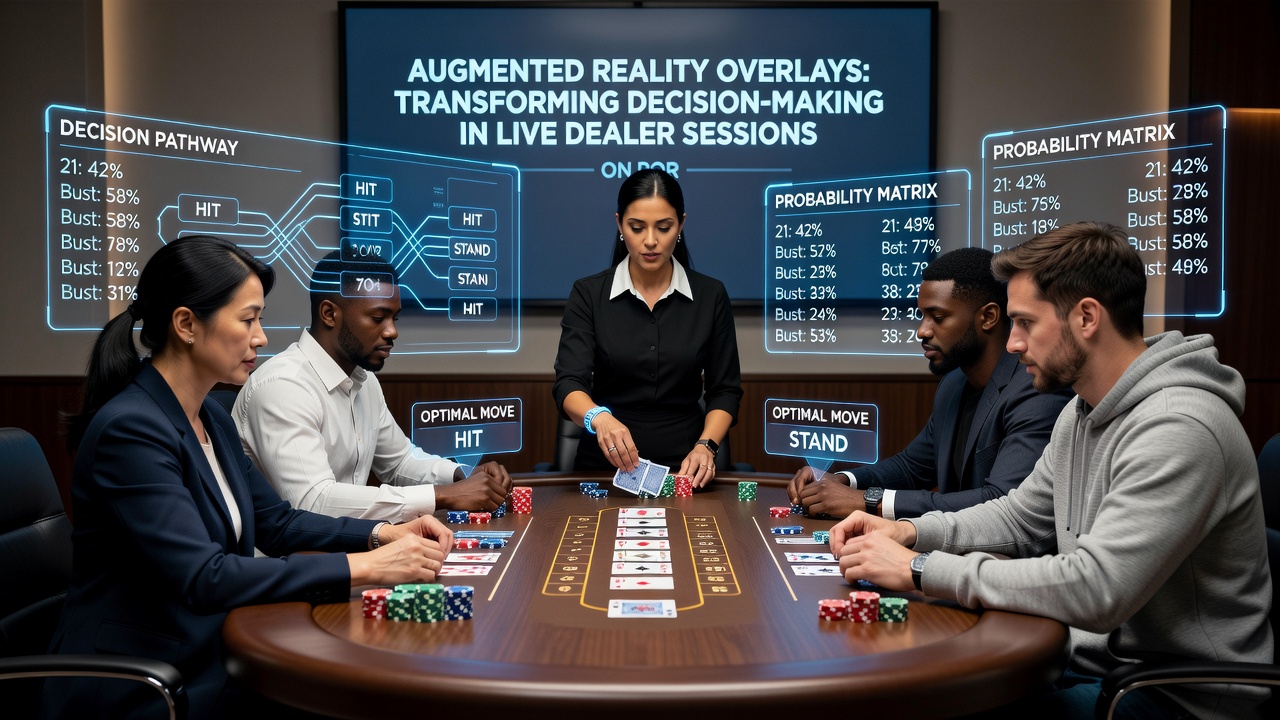
What's interesting is how these overlays interact with the social aspects of live dealer games, since players still observe dealer mannerisms and table atmosphere through the stream while the AR components supply supplementary metrics. This dual input stream creates a hybrid decision environment where emotional responses to the live action combine with data-driven prompts, and industry organizations tracking user behavior note variations in session length and outcome distribution when AR tools remain active throughout play.
Regional Developments and Data Trends as of August 2026
Regulatory bodies in multiple jurisdictions have begun reviewing how AR features affect player engagement, and reports from the Australian Gambling Research Centre highlight increased adoption rates of enhanced mobile interfaces in regulated markets during the first half of 2026. Figures reveal that sessions incorporating AR overlays demonstrate measurable differences in average bet amounts and choice consistency compared with standard mobile streams, although the extent varies by game type and user experience level. The Nevada Gaming Control Board has similarly referenced ongoing monitoring of technology integrations that deliver real-time analytics to participants on handheld devices.
Academic papers published through university gaming studies programs describe experiments where control groups using basic mobile apps were compared against those with AR enhancements, and results point to altered risk tolerance levels when overlay data remains visible. These findings emerge from controlled trials that isolate the impact of visual information layers while maintaining consistent live dealer conditions across test environments.
Integration Challenges and Platform Adaptations
Platform providers face technical requirements when embedding AR capabilities into existing live dealer infrastructure, and compatibility across diverse portable hardware models demands ongoing optimization of rendering processes. Data shows that latency between the live stream and overlay updates must stay minimal to preserve the integrity of decision timing, while battery consumption and device heating represent practical constraints that influence session duration. Industry associations have compiled guidelines addressing these factors to support consistent performance across different operating systems and screen sizes.
Take one developer team that adjusted overlay density after observing user drop-off rates during extended sessions, and the modifications led to more selective display of metrics that align with common decision points in games such as roulette and baccarat. Such adaptations reflect broader efforts to balance informational richness with usability on smaller screens.
Conclusion
Augmented reality overlays continue to modify the informational landscape available during live dealer sessions on portable devices, and available evidence points to changes in how participants weigh options when supplementary data appears alongside traditional visual feeds. Regulatory reviews and research initiatives across different regions track these developments to understand long-term effects on engagement patterns, while platform adjustments aim to refine the delivery of these tools for sustained compatibility and performance. The ongoing evolution of this technology integration reflects measurable shifts in mobile gaming interfaces that connect live action with analytical support in real time.